
Restoring Degraded Soil with Beneficial Microorganisms: A Sustainable Solution for Healthy Agriculture
Introduction
Healthy soil is the foundation of productive agriculture and sustainable ecosystems. However, decades of intensive farming, excessive chemical fertilizer use, pesticide application, erosion, and climate change have caused millions of hectares of agricultural land worldwide to become degraded. Soil degradation reduces fertility, weakens plant growth, lowers crop yields, and increases production costs.
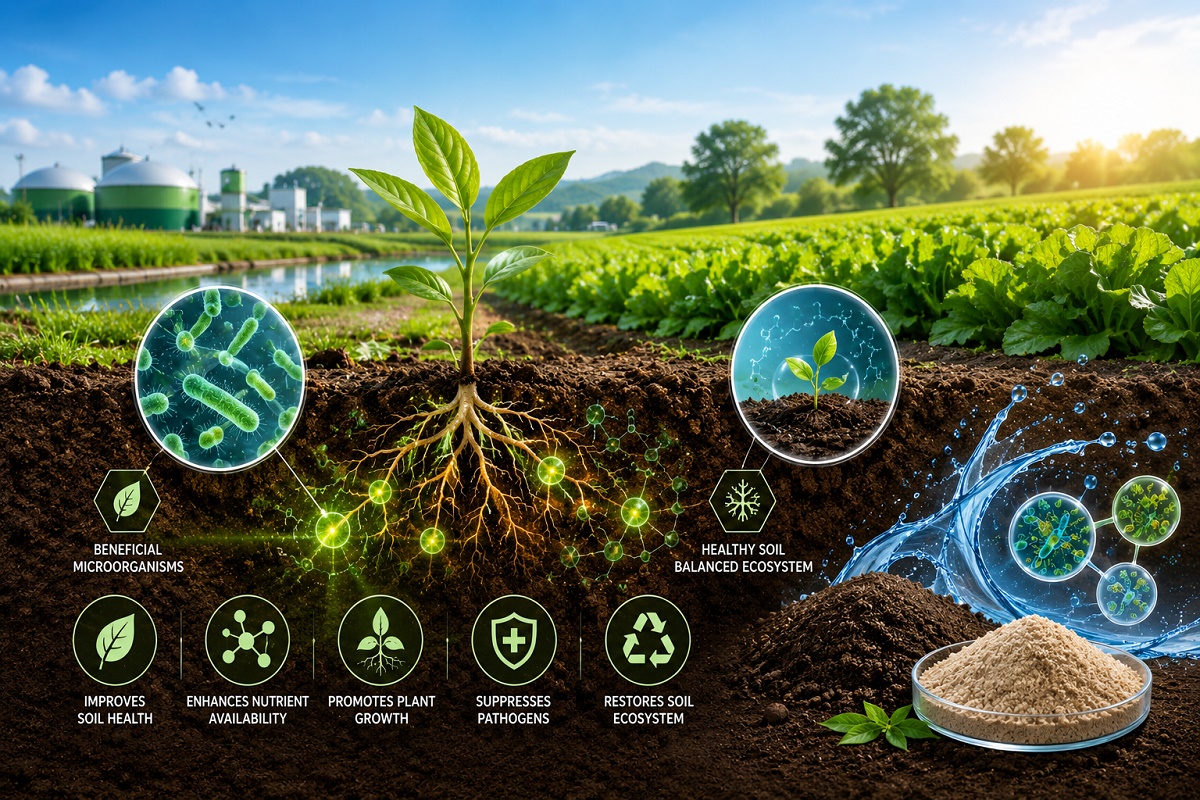
Today, farmers and agricultural industries are increasingly turning to biological solutions to restore soil health. Among these, beneficial microorganisms have emerged as one of the most effective and environmentally friendly approaches. These naturally occurring microbes improve soil structure, enhance nutrient availability, suppress harmful pathogens, and rebuild healthy soil ecosystems.
By harnessing the power of biotechnology, beneficial microorganisms provide a sustainable solution for restoring degraded soils while reducing dependence on synthetic chemicals.
What Is Soil Degradation?
Soil degradation is the gradual decline in soil quality caused by physical, chemical, and biological changes that reduce its ability to support plant growth.
Common signs of degraded soil include:
- Low organic matter content
- Poor water retention
- Soil compaction
- Nutrient deficiencies
- Increased salinity
- Soil acidification
- Reduced microbial diversity
- Higher incidence of soil-borne diseases
As soil health declines, crops become more vulnerable to environmental stress, pests, and diseases, ultimately affecting farm productivity and profitability.
Causes of Soil Degradation
Several agricultural practices contribute to soil degradation over time.
Excessive Chemical Fertilizer Use
Long-term application of synthetic fertilizers without replenishing organic matter disrupts soil biology and gradually reduces microbial diversity.
Overuse of Pesticides
Many chemical pesticides eliminate not only harmful organisms but also beneficial microorganisms that naturally maintain soil balance.
Continuous Monoculture
Growing the same crop repeatedly depletes specific nutrients and encourages the buildup of crop-specific pathogens.
Soil Erosion
Wind and water erosion remove nutrient-rich topsoil, leaving behind infertile land with reduced productivity.
Poor Irrigation Management
Improper irrigation may increase soil salinity and reduce oxygen availability for plant roots and beneficial microorganisms.
Why Beneficial Microorganisms Matter
Healthy soil contains billions of microorganisms in every gram. These invisible organisms play essential roles in maintaining soil fertility and supporting plant development.
Beneficial microorganisms perform several important functions:
- Decompose organic matter.
- Release essential nutrients.
- Improve soil structure.
- Increase root development.
- Suppress harmful pathogens.
- Enhance nutrient cycling.
- Improve water retention.
- Strengthen plant resistance to stress.
Without a balanced microbial ecosystem, soil gradually loses its biological activity and becomes less productive.
Types of Beneficial Microorganisms
Modern biological soil improvement products often contain multiple groups of microorganisms working together.
Nitrogen-Fixing Bacteria
These bacteria convert atmospheric nitrogen into forms that plants can absorb, reducing the need for synthetic nitrogen fertilizers.
Phosphate-Solubilizing Bacteria
Many soils contain phosphorus that plants cannot utilize. Specialized bacteria convert insoluble phosphorus into plant-available nutrients.
Potassium-Mobilizing Microorganisms
Certain microorganisms release potassium from soil minerals, improving plant nutrition and crop quality.
Cellulose-Degrading Microorganisms
These organisms accelerate the decomposition of crop residues, returning valuable organic matter to the soil.
Beneficial Fungi
Fungi such as mycorrhizae form symbiotic relationships with plant roots, increasing nutrient and water absorption while improving drought tolerance.
Benefits of Using Beneficial Microorganisms
Biological soil restoration provides numerous advantages for both farmers and the environment.
Improved Soil Structure
Microbial activity increases organic matter decomposition and promotes the formation of stable soil aggregates. Better soil structure improves aeration, drainage, and root penetration.
Enhanced Nutrient Availability
Beneficial microbes continuously convert unavailable nutrients into forms that plants can absorb, improving fertilizer efficiency and reducing nutrient losses.
Increased Crop Productivity
Healthier soils support stronger root systems, vigorous plant growth, higher yields, and improved crop quality.
Disease Suppression
Many beneficial microorganisms naturally compete with harmful pathogens for nutrients and space while producing compounds that inhibit disease-causing organisms.
Reduced Chemical Dependency
As soil biology improves, farmers can gradually reduce chemical fertilizer and pesticide applications, lowering production costs and minimizing environmental pollution.
Better Water Retention
Microbial activity increases soil organic matter, allowing the soil to retain moisture more effectively during dry periods.
Best Practices for Soil Restoration
Successful soil restoration requires an integrated management approach.
Recommended practices include:
- Applying high-quality microbial products regularly.
- Incorporating compost and organic matter into the soil.
- Reducing excessive chemical fertilizer use.
- Practicing crop rotation.
- Maintaining proper irrigation management.
- Avoiding unnecessary pesticide applications.
- Monitoring soil pH and nutrient levels.
- Minimizing soil compaction through proper field management.
These practices create favorable conditions for beneficial microorganisms to establish stable populations and restore long-term soil health.
Future of Biological Soil Improvement
Agriculture is shifting toward regenerative and sustainable farming systems. Biotechnology is playing an increasingly important role in this transformation.
Advanced microbial formulations now combine multiple beneficial species that work synergistically to improve soil fertility, accelerate organic matter decomposition, and increase crop resilience under changing climate conditions.
Precision agriculture technologies are also helping farmers monitor soil health more accurately and optimize microbial applications for maximum effectiveness.
As global demand for environmentally friendly farming continues to grow, biological soil restoration will become an essential strategy for improving food security while protecting natural resources.
Conclusion
Restoring degraded soil with beneficial microorganisms is one of the most effective and sustainable approaches to modern agriculture. By rebuilding the natural biological balance of the soil, farmers can improve fertility, enhance nutrient availability, suppress harmful pathogens, and increase crop productivity without relying heavily on chemical inputs.
Healthy soil is more than just a growing medium—it is a living ecosystem that supports plants, protects water resources, and sustains agricultural production for future generations. Through innovative biotechnology and responsible farming practices, beneficial microorganisms offer a powerful solution for transforming degraded land into fertile, productive, and environmentally sustainable farmland.
