
Residential Community Wastewater Treatment: Building Cleaner, Healthier, and Sustainable Living Environments
Introduction
As urbanization continues to expand worldwide, residential communities are growing rapidly, bringing increased pressure on environmental infrastructure. One of the greatest challenges facing modern communities is the proper management of domestic wastewater. Without effective treatment, wastewater from households can pollute rivers, lakes, groundwater, and surrounding ecosystems while posing significant health risks to residents.
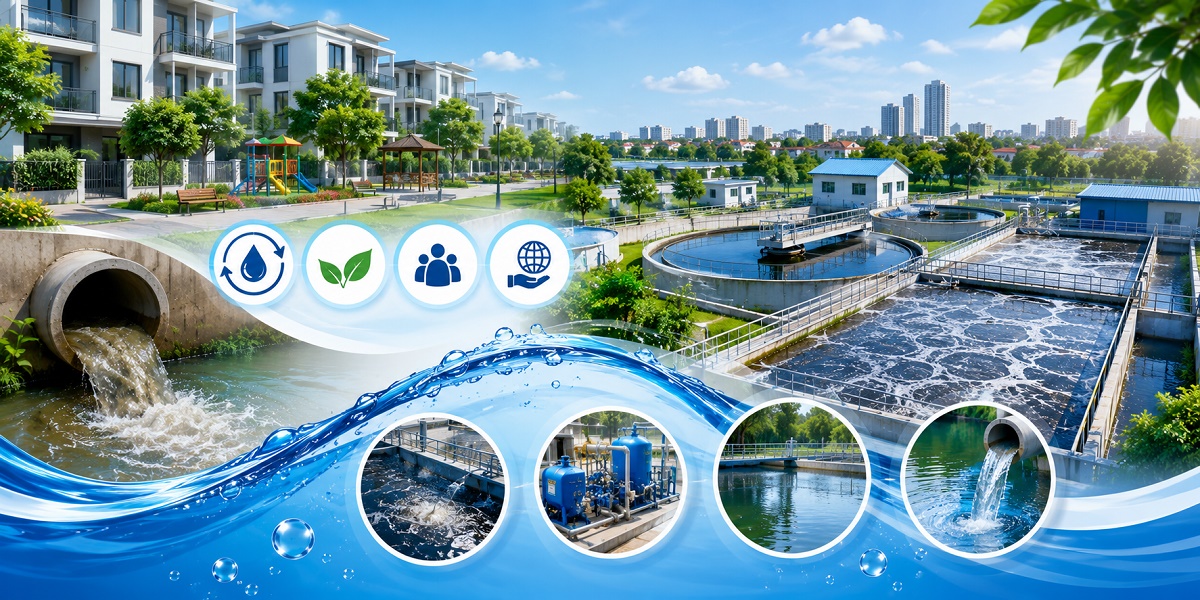
Residential community wastewater treatment is an essential component of sustainable urban development. Modern treatment technologies not only protect natural water resources but also improve public health, comply with environmental regulations, and create cleaner living environments for future generations.
What Is Residential Wastewater?
Residential wastewater refers to water discharged from daily household activities, including:
- Kitchen wastewater containing food residues, grease, and detergents.
- Bathroom wastewater from showers, sinks, and laundry.
- Toilet wastewater containing organic waste and pathogens.
- General domestic cleaning water.
Although domestic wastewater is less contaminated than industrial wastewater, it still contains high concentrations of organic matter, suspended solids, nitrogen, phosphorus, bacteria, viruses, and chemical residues that require proper treatment before discharge.
Why Wastewater Treatment Is Important
Untreated domestic wastewater can cause severe environmental and social impacts.
Protecting Public Health
Wastewater contains harmful microorganisms that can spread diseases through contaminated water sources. Proper treatment significantly reduces bacteria, viruses, and parasites, protecting both residents and nearby communities.
Preserving Water Resources
Surface water and groundwater are valuable resources for agriculture, industry, and daily consumption. Wastewater treatment prevents contamination and helps preserve these resources for long-term use.
Reducing Environmental Pollution
Organic pollutants consume dissolved oxygen when discharged into rivers and lakes, leading to fish deaths, unpleasant odors, and ecosystem degradation. Effective treatment removes these contaminants before they enter natural waterways.
Meeting Environmental Regulations
Most countries require residential developments to comply with wastewater discharge standards. Installing efficient treatment systems helps developers and property managers avoid legal penalties while demonstrating environmental responsibility.
Main Pollutants Found in Domestic Wastewater
Typical residential wastewater contains several types of contaminants:
Organic Matter
Measured as Biological Oxygen Demand (BOD) and Chemical Oxygen Demand (COD), organic matter is primarily generated from food waste, soap, and human waste.
Suspended Solids (TSS)
Small solid particles create cloudy water and can accumulate in receiving water bodies if not removed.
Nitrogen and Phosphorus
These nutrients promote excessive algae growth, causing eutrophication and reducing oxygen levels in lakes and rivers.
Pathogenic Microorganisms
Bacteria, viruses, and parasites pose direct health risks when untreated wastewater enters the environment.
Household Chemicals
Cleaning products, detergents, and disinfectants may contain substances harmful to aquatic ecosystems.
Common Wastewater Treatment Process
Modern residential wastewater treatment plants generally follow several treatment stages.
Preliminary Treatment
Large debris, plastics, sand, and coarse solids are removed through screening and grit chambers. This protects downstream equipment from damage.
Primary Treatment
Sedimentation tanks allow heavier particles to settle while floating materials such as grease are removed from the surface.
Biological Treatment
This is the most important stage of the process. Beneficial microorganisms naturally break down dissolved organic matter, converting pollutants into harmless substances.
Popular biological treatment technologies include:
- Activated sludge systems
- Moving Bed Biofilm Reactor (MBBR)
- Sequencing Batch Reactor (SBR)
- Membrane Bioreactor (MBR)
- Biological filters
These systems achieve high removal efficiencies while reducing operational costs.
Secondary Clarification
After biological treatment, remaining suspended solids settle in clarifiers before the treated water proceeds to final polishing.
Disinfection
Ultraviolet (UV) systems, ozone, or chlorination eliminate harmful microorganisms before the treated water is discharged or reused.
Advantages of Biological Wastewater Treatment
Biological treatment has become the preferred solution for residential communities due to its excellent performance and environmental benefits.
Key advantages include:
- High removal efficiency for BOD and COD.
- Significant reduction of odors.
- Lower chemical consumption.
- Environmentally friendly operation.
- Stable long-term performance.
- Reduced operating costs.
- Compliance with strict environmental standards.
Advanced microbial products further improve treatment efficiency by accelerating organic matter decomposition and enhancing biological stability.
Best Practices for Efficient Wastewater Management
To ensure consistent treatment performance, operators should follow several important practices.
Regular monitoring of water quality parameters such as pH, dissolved oxygen, BOD, COD, ammonia, and suspended solids allows early detection of operational problems.
Routine equipment maintenance ensures pumps, blowers, aerators, and monitoring instruments function efficiently.
Using high-quality microbial solutions can improve biological activity, reduce sludge accumulation, minimize unpleasant odors, and enhance nutrient removal.
Periodic sludge removal prevents excessive accumulation that may reduce treatment efficiency.
Staff training is equally important, ensuring operators understand system operation, troubleshooting, and preventive maintenance.
Future Trends in Residential Wastewater Treatment
The wastewater treatment industry is rapidly evolving toward smarter and more sustainable technologies.
Modern treatment facilities increasingly integrate automation systems, IoT sensors, artificial intelligence, and real-time monitoring to optimize performance while reducing energy consumption.
Biotechnology is also playing a larger role. Specialized microbial products help accelerate pollutant degradation, reduce sludge production, and improve overall system stability with minimal environmental impact.
Water reuse is becoming another major trend. Properly treated wastewater can be safely reused for landscape irrigation, toilet flushing, industrial cooling, and other non-potable applications, reducing freshwater demand.
Conclusion
Residential community wastewater treatment is far more than an environmental requirement—it is an investment in public health, sustainable development, and long-term resource conservation. As urban populations continue to grow, adopting advanced biological treatment technologies becomes increasingly important for protecting ecosystems while supporting modern, livable communities.
By combining effective engineering, regular monitoring, and innovative biotechnology solutions, residential wastewater treatment systems can achieve excellent performance, lower operating costs, and contribute to a cleaner, greener future. Sustainable wastewater management is not only beneficial for today’s communities but also essential for preserving water resources and environmental quality for generations to come.
